
Face to Face With the Wild at My Front Door
Sep 21, 2026
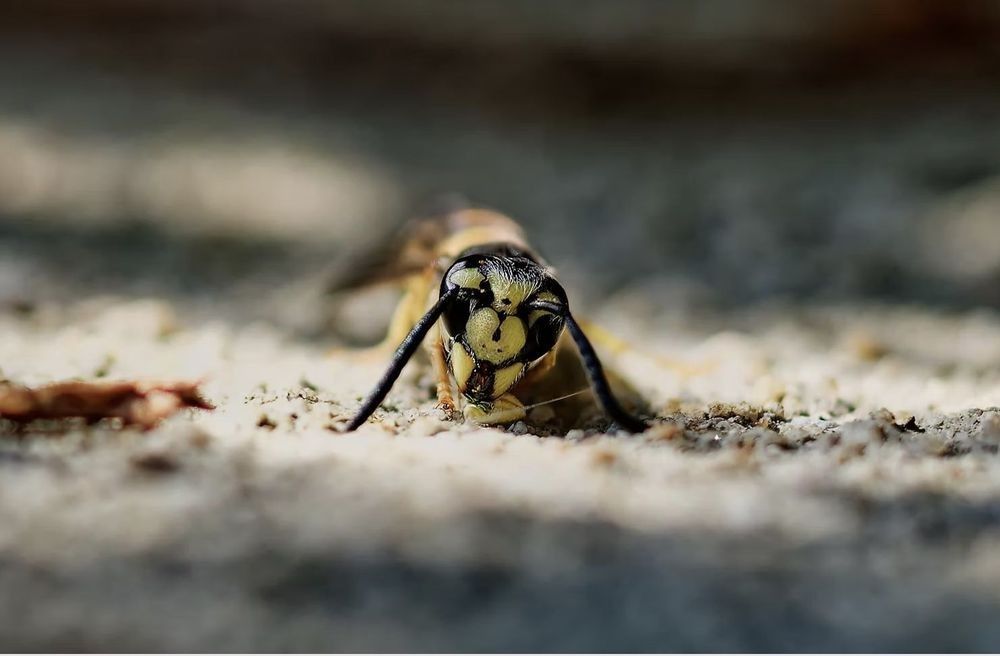
The wild does not always announce itself from a distant ridge or a shadowed forest. Sometimes it waits in plain sight, on a strip of sidewalk, beside the porch, where the afternoon sun turns concrete pale and warm. That is where I found this yellow jacket wasp, yellow jack—still for a moment, as if pausing between errands known only to itself.
At close range, the insect became less a nuisance than a miniature subject of astonishing design. Yellow jackets are social wasps, not bees, and their smoother, less hairy bodies carry the familiar warning pattern of gold and black. Unlike honeybees, they do not have pollen baskets on their hind legs, yet they still visit flowers, sip nectar and other sweet liquids, and can move pollen as they go. They are predators as well, hunting caterpillars, flies, and other small insects to feed their young—small hunters stitched into the daily work of the garden.
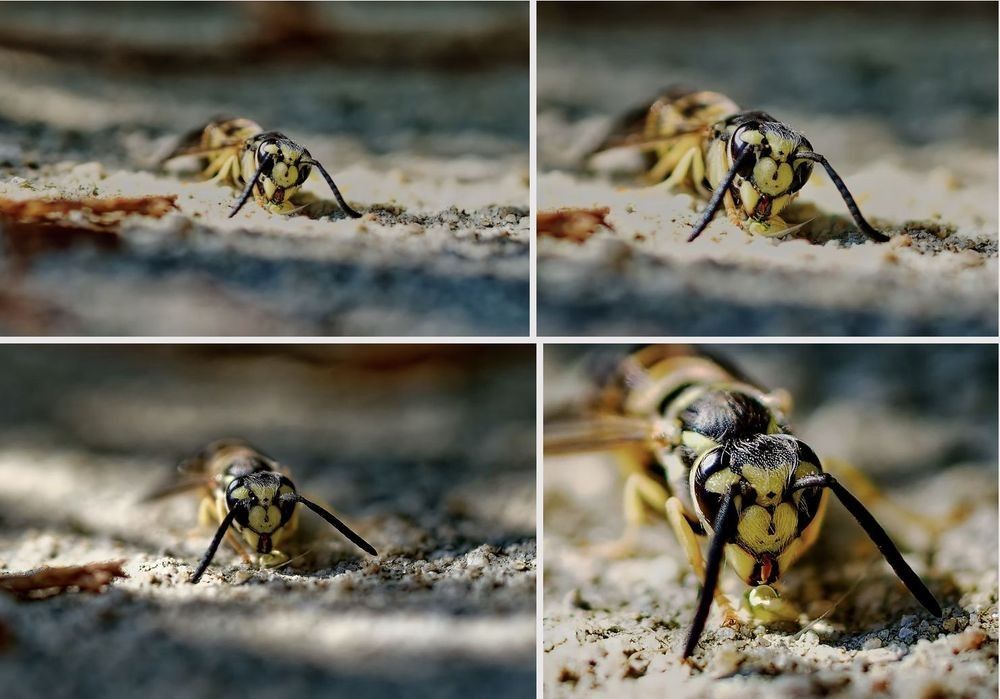
Through the macro lens, those colors opened into something more intricate: plates of armor, delicate hairs, angled legs, and a face both severe and strangely dignified. The wasp’s presence was alert and electric, yet for a few seconds it allowed the camera to study what the naked eye usually misses.
I approached slowly with Sony’s 90 mm macro lens, working within the uneasy truce that exists between photographer and wild creature. The light fell across the wasp’s face and body, catching the fine pale hairs around its head until they resembled the silvered whiskers of an old traveler. In the finished image, that detail changed the mood of the portrait. The wasp was no longer simply sharp, striped, and dangerous; it became textured, weathered, and alive with character.
The encounter ended with a reminder that even the smallest wild things keep their own boundaries. Female yellow jackets can sting more than once, and a colony will defend its nest when disturbed. Working near the hive earned me a sting on my left forefinger—a sharp punctuation mark at the end of the session. Still, the exchange felt fair. For one brief suburban moment, the front walk became a field station, the wasp became a portrait subject, and the ordinary edge of home opened into something untamed.
Photo Notes: I shot the image at 1/250th of a second at f/2.8. The bright light and the wasp’s brief stillness let me capture individual frames before it returned to the nearby hive. Yellow jackets build paper-like nests from chewed wood fiber, often in protected places such as soil cavities, wall voids, logs, or sheltered structures; many colonies grow quietly through spring and summer before becoming more noticeable later in the season. In DxO PhotoLab 10, I refined the photograph with contrast, micro-contrast, exposure adjustments, color work, and subtle highlight control to bring out the insect’s hidden structure
Stuart F. James (sfj@stuartphoto.com)