Close Encounter of the Bison Kind
Some encounters refuse to fade. They remain suspended in memory—sharp, luminous, and untouched by time—returning with such force that the air, the light, and even the smallest details seem to gather around you again. A single photograph can preserve more than an image; it can hold the weight of an instant when the familiar world suddenly gave way to something rare, untamed, and unforgettable. This is especially true when the figure in the photograph is an American bison.
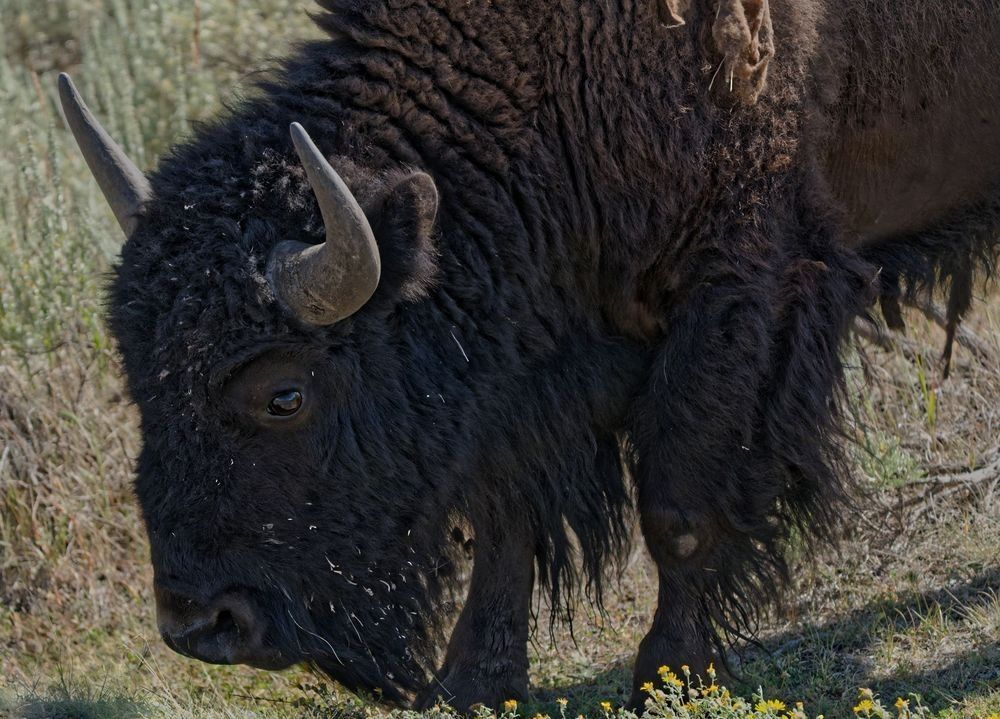
A bison does not merely occupy the landscape; it overpowers it. Its massive shoulders rise above the grass like a moving wall, built of dense muscle and bone beneath a mantle of dark, weather-beaten hair. The enormous head hangs low, armored by a broad skull and curved horns, while each deliberate step drives its weight into the earth with quiet authority. Even at rest, the animal radiates contained force—the kind of power that needs no display because nothing around it can ignore its presence. Yet beneath that ancient, almost statuesque composure lies explosive speed and unpredictability. A tranquil encounter can turn dangerous in a heartbeat. At Yellowstone, the warning is unequivocal: never approach or crowd a bison. A close encounter can cause disabling injuries or death.
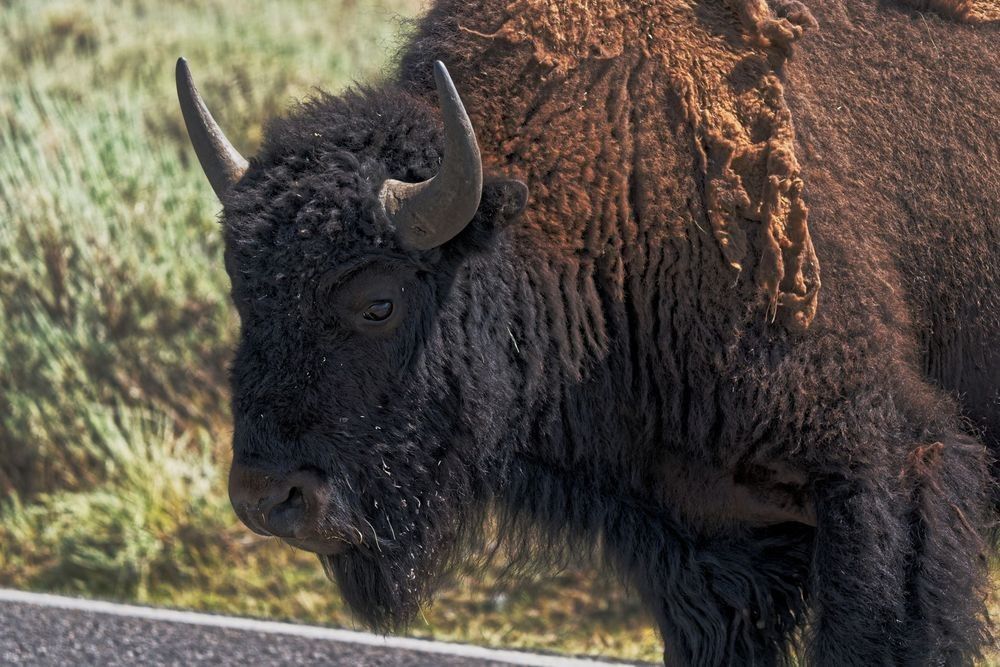
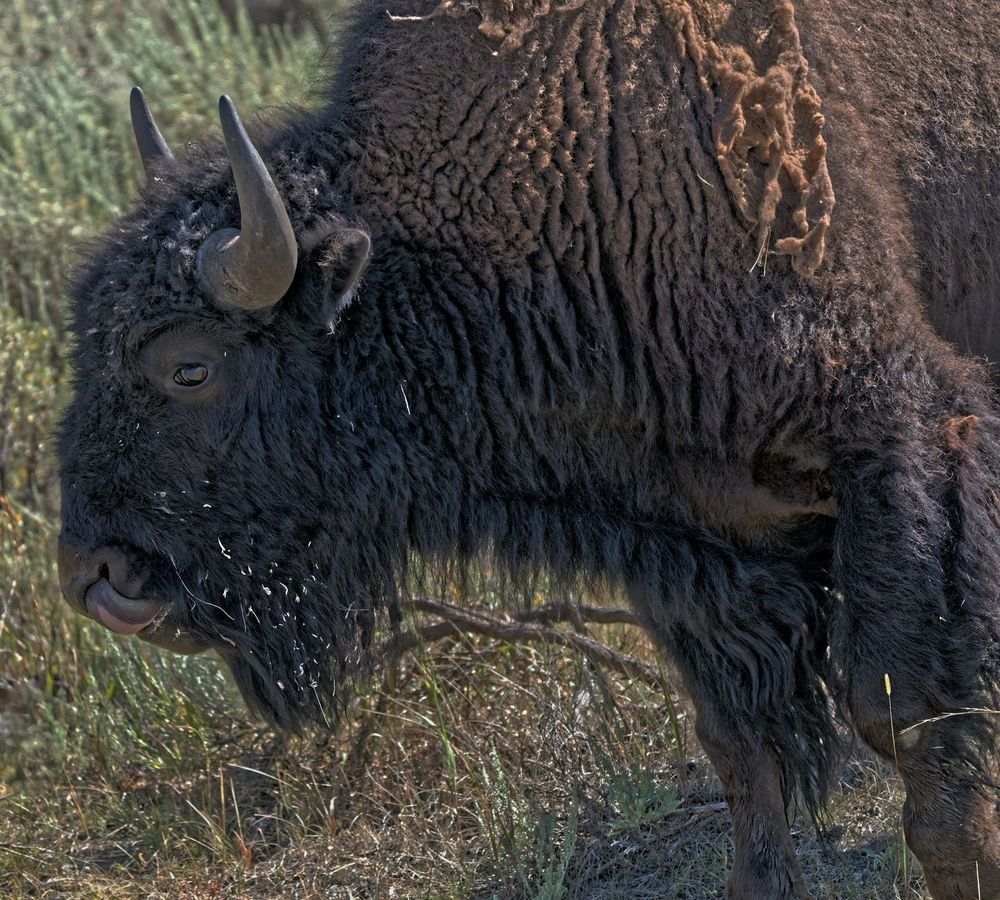
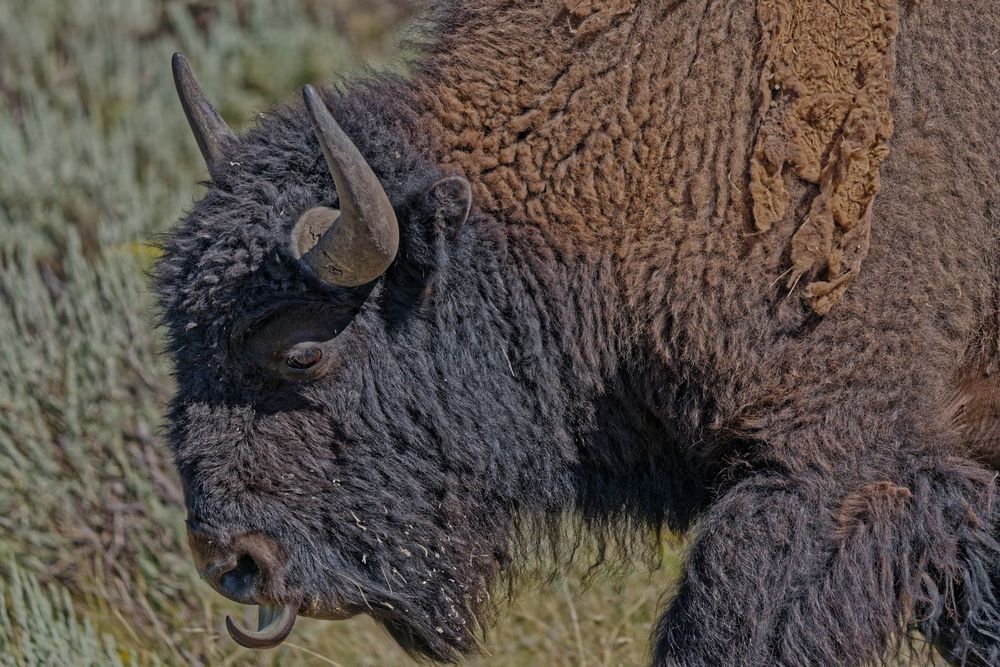
I had been contentedly photographing a bison herd as the low murmur of nearby visitors blended with the park's open stillness. Then the atmosphere began to shift. One by one, the people around me slipped away, their attention drawn to something behind my right shoulder. I turned—and there he was. A massive bison had stepped onto the road and was advancing directly past me, far closer than I had intended. At that distance, his size was overwhelming. His broad head hung beneath a dark, woolly crown, and his tremendous shoulders rolled beneath the thick hide like machinery set in motion. Each hoof met the road with the weight of the animal behind it; each measured stride carried an unmistakable warning that he, not we, commanded the space. My camera was still raised where I had been photographing. I took a deep breath and made no sudden moves. Time seemed to contract around the immense body filling my peripheral vision. Moving as slowly and subtly as I could, I eased a finger onto the shutter. I did not run. I barely breathed. I remained silent and motionless, acutely aware that the slightest turn of that powerful head could place me before an animal capable of covering the short distance in milliseconds.
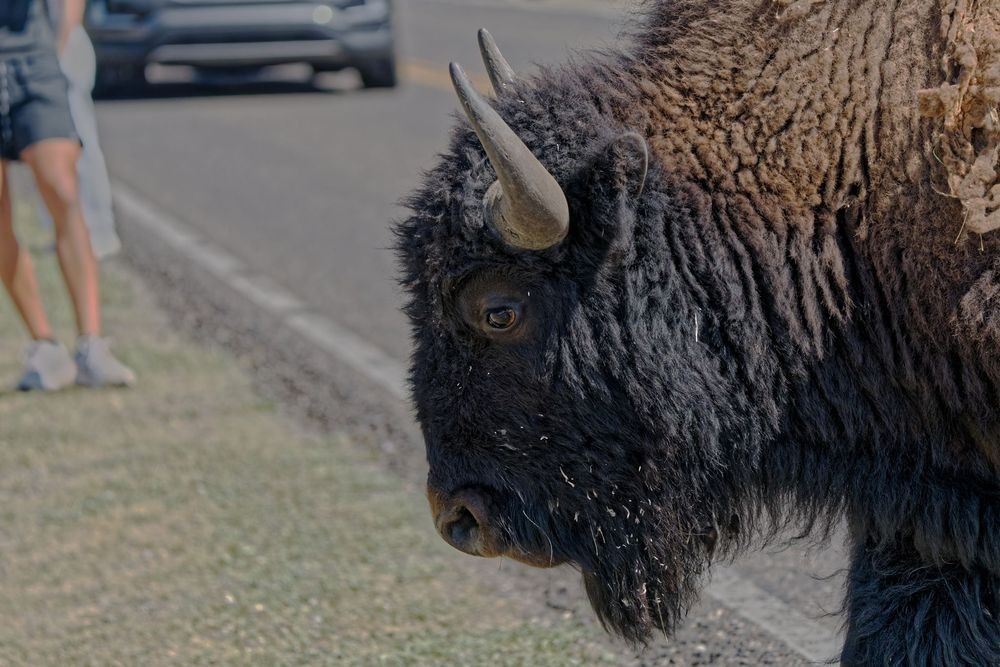
The bison continued forward with the unhurried certainty of an animal that feared nothing in its path. He did not need to charge or posture; his sheer mass made each step a declaration of dominance. For a suspended instant, he paused and stared at me. The world narrowed to that single look—the broad skull, the polished curve of the horns, the bison eye, and the immense reservoir of strength held perfectly still between us. Then he moved on with the same effortless authority.
It was breathtaking in the truest sense—awe edged with danger, wonder sharpened by relief—as the bison receded toward the pale grasses and the gentle, rolling folds of the landscape beyond.
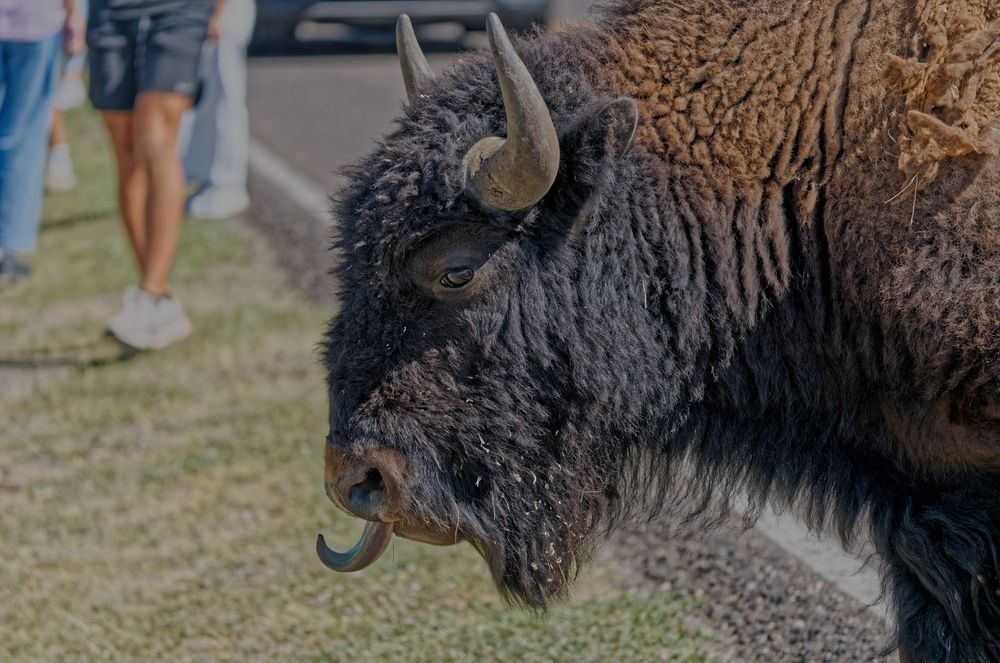
Around me, the other visitors stood in silence, as if the entire roadside had been holding its breath beneath the bison’s weight. We had all understood, without a word, the fragile boundary between witnessing such power and provoking it. When the bison finally continued its trek into the wilderness, the tension eased almost visibly, and we all let out a shared breath of relief. For those few suspended seconds, strangers had been bound together by the same extraordinary sight: a living monument to the American wilderness, immense and self-possessed, passing close enough to make the ground, the air, and memory itself seem to tremble. Everyone was amazed by my unique position, the proximity between the bison and me, and the peaceful moment of coexistence that arose from the respect its human friends showed the bison, a respect that permitted a “close encounter of the bison kind.”
I captured these images with a Sony A7RV at 200 mm, 1/1600 of a second, and ISO 1000. I edited the photographs in DxO PhotoLab 10. The images preserve the scene exactly as it unfolded—the immense animal and the startlingly narrow space between us during my close encounter with a bison.
Stuart F. James (sfj@stuartphoto.com)